Heights Eye Studio
1533 N Shepherd Dr Ste 120, Houston, TX 77008


Does Screen Time Worsen Lazy Eye in Children?

Does Screen Time Worsen Lazy Eye in Children?
Kids these days spend a ton of time glued to screens while in school, playing games, browsing YouTube videos, you name it. Screens are just part of life now. But when you think about eye health, especially if your child has lazy eye, it’s natural to wonder if all that screen time could make things worse. Let’s break it down and talk about what you can do to protect your child’s vision.
What’s lazy eye?
The medical name is amblyopia. It’s when one eye doesn’t develop normal vision because the brain starts to rely more on the stronger eye. Around 2-3% of kids in the US have it. If you don’t catch it early, that weaker eye can end up with permanent vision loss. The good news? You can treat it, especially if you see it when your child is little.
How Screen Time Affects Eye Health
Too much screen time can damage anyone’s vision, but it’s especially challenging for kids. When they stare at tablets or computers for hours, they blink less, which dries out their eyes. Their eyes get tired, maybe even blurry. Doctors call it digital eye strain.
For children with lazy eye, the stakes are higher. If they’re always using the stronger eye to look at screens, the weaker eye doesn’t get much of a workout. Over time, that can make things worse. The strong eye just keeps getting stronger, and the weak one falls further behind. That’s why it’s so important to keep an eye on how much time your child spends on devices, especially if they already have amblyopia.
Tips to Protect Your Child’s Eyes
Let’s be real: lazy eye is about the brain not giving both eyes a fair chance to function. Screens don’t help because kids often end up using their dominant eye more, leaving the other eye underused. Plus, fast-changing, high-contrast images on screens are harsh on the eyes, especially if your child holds the device up close. All that can make it even harder for the weaker eye to catch up.
But you’re not powerless here. You can take steps to help:
- Set limits on screen time. The American Academy of Pediatrics recommends no more than 2 hours of recreational screen time per day for kids ages 2 to 5. For older kids, regular breaks are key.
- Try the 20-20-20 rule. Have your child look at something 20 feet away for 20 seconds every 20 minutes. It’s a simple way to give their eyes a break.
- Pay attention to posture. Make sure your child sits about an arm’s length from the screen and keeps it at eye level.
- Get both eyes working. Encourage activities like reading, puzzles, or just playing outside. Anything that makes the weaker eye function at its optimal helps.
- Don’t skip eye exams. Regular check-ups are essential for children with lazy eye. If they’re already undergoing treatment for amblyopia, keep follow-up appointments so the doctor can track their progress.
How Treatment Can Help Lazy Eye
There are a couple of tried-and-true ways to help kids with lazy eye:
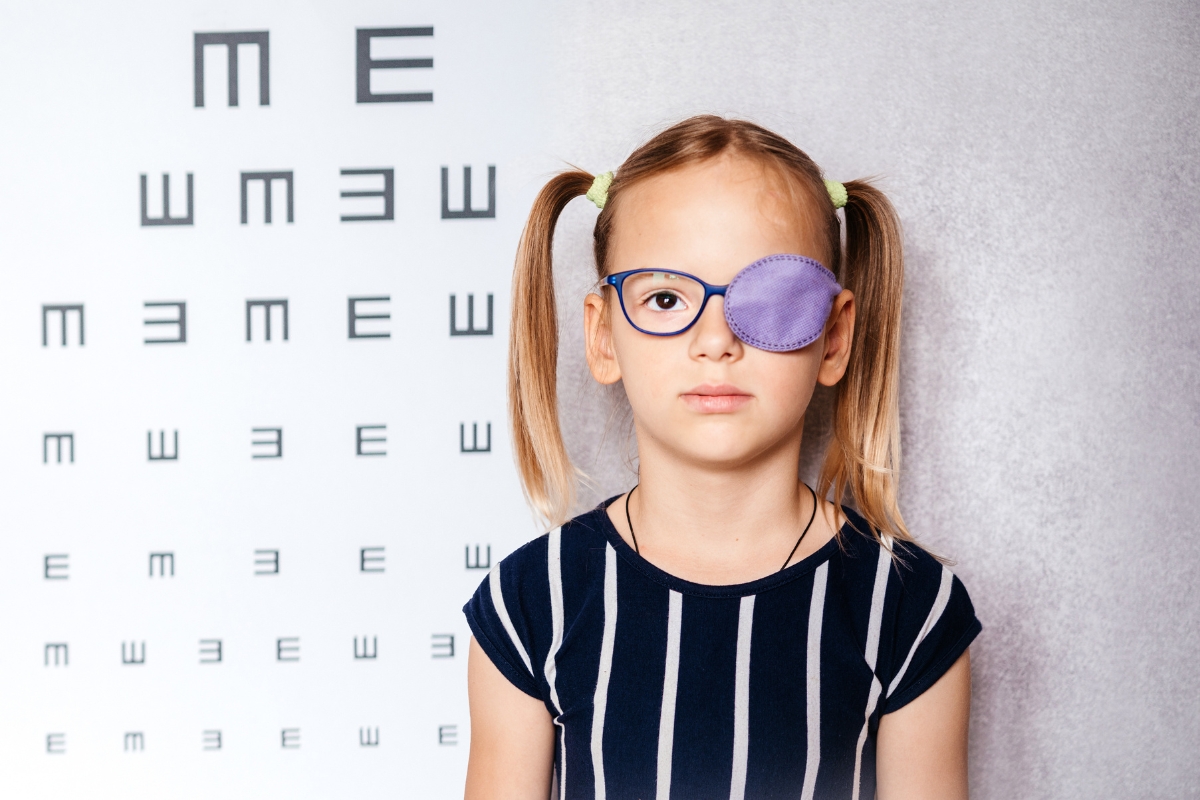
- Eye patches—yes, just like a pirate. Covering the strong eye makes the weaker one do more work.
- Glasses or contacts. Sometimes kids need prescription lenses to help both eyes focus correctly.
- Vision therapy. These are eye exercises designed to train the eyes and brain to work together.
Screen time isn’t the only reason kids develop lazy eye, but too much of it definitely doesn’t help. Cutting back on screen time and making sure your child does activities that use both eyes can go a long way toward keeping their vision on track. If you’re worried about your child’s eyes or think they might have lazy eye, don’t wait. Book an appointment with us at Heights Eye Studio. We’ll help keep your child’s eyes healthy and strong.
FAQs
- How can I tell if my child has a lazy eye?
Lazy eye often goes unnoticed in the early stages. Watch for signs like squinting, covering one eye, or difficulty focusing on objects. An eye exam with an optometrist is the best way to confirm. - Can lazy eye be corrected in adults?
While treatment for lazy eye is most effective in childhood, adults can still benefit from vision therapy and corrective lenses to improve their vision. Early treatment offers the best chance for full recovery. - Does wearing glasses help the lazy eye?
Yes, glasses can correct refractive errors and allow both eyes to focus correctly, which can help manage lazy eye. In some cases, glasses alone may be enough to improve vision. - Is there a risk of permanent vision loss with lazy eye?
If left untreated, lazy eye can lead to permanent vision impairment in the weaker eye. That’s why it’s crucial to seek early treatment to prevent long-term damage.